

Answering the question “How Do I Choose the Right Kitchen Remodeling Contractor for My Project?” starts with verifying licensing, insurance, and lead certification, then reviewing a documented track record. Paul’s Carpentry Workshop, for example, brings over 40 years of combined experience and 500+ completed projects. Homeowners should compare written proposals, confirm clear communication practices, and request free estimates before committing to any Massachusetts-based renovation firm.
Why Does Choosing the Right Contractor Matter?
A kitchen renovation reshapes daily life, not just the room’s appearance. Cooking, gathering, storage, even morning routines all shift once cabinets, counters, and layouts change. Ruvati’s guide to selecting a kitchen renovation professional frames the project as a lifestyle transformation rather than a simple design upgrade. That framing explains why the contractor behind the work carries so much weight. A rushed hire risks years of frustration; a careful one delivers a space that actually fits how a family lives.
Money is on the line too. A competent contractor shapes both how the finished kitchen looks and how much value it adds to the home. A poor one can erode both outcomes at once. Cut corners rarely show up on day one. They surface months later as failing hardware, uneven finishes, or a resale appraisal that falls short of expectations.
What Should Homeowners Expect From a Quality-Focused Contractor?
Reliable kitchen remodeling contractor teams commit to quality materials and refined finishes, which protects homeowners from the far higher cost of tearing out and redoing shoddy work later. Paul’s Carpentry Workshop builds its mission around personalized service paired with meticulous, detail-driven craftsmanship, aiming for a result that reflects each client’s specific vision rather than a one-size-fits-all template.
How Does Contractor Choice Affect the Final Result?
The gap between a mediocre install and a masterful one often has little to do with the design itself. Two homeowners can choose identical cabinets and countertops and land in very different places, because execution — measurements, sequencing, finish work — determines whether the plan on paper becomes a kitchen that performs and lasts.
What Licensing and Credentials Should You Verify?
Proper licensing separates a qualified professional from a risky gamble on one of the most expensive rooms in the house. Homeowners planning a kitchen remodeling contractor search should confirm three things before signing anything: state licensing, active insurance, and lead-safety certification for older homes. Skipping this step invites the exact outcome a smart buyer wants to avoid. A substandard install that undermines even the most carefully planned design.
Paul’s Carpentry Workshop, for example, operates as a licensed, insured, and lead-certified general contractor. Finish carpenter based in Stoneham, Massachusetts, backed by more than 40 years of combined carpentry and remodeling experience. That combination matters because it signals both legal compliance and hands-on skill built over decades, not just a business license printed last week.
Why does a Better Business Bureau rating matter?
A strong BBB rating reflects a track record of resolved complaints and consistent customer satisfaction over time. Paul’s Carpentry Workshop holds an A+ Better Business Bureau rating, a distinction that gives homeowners a third-party benchmark rather than relying on a contractor’s own claims.
Who handles the permits and inspections?
The right contractor manages permits and inspections in-house, removing that burden from the homeowner entirely. Paul’s Carpentry Workshop oversees every stage of the remodeling process this way, from initial paperwork through final inspection sign-off.
Before hiring anyone, homeowners should ask direct qualifying questions:
- Is the license current and specific to Massachusetts remodeling work?
- Does insurance coverage protect against on-site accidents or property damage?
- Is the team lead-certified for homes built before lead paint bans?
- Who pulls permits, and who schedules inspections?
These questions confirm whether a professional is truly qualified and trustworthy, turning a leap of faith into an informed decision.
How Do You Vet Contractor Experience and Reviews?
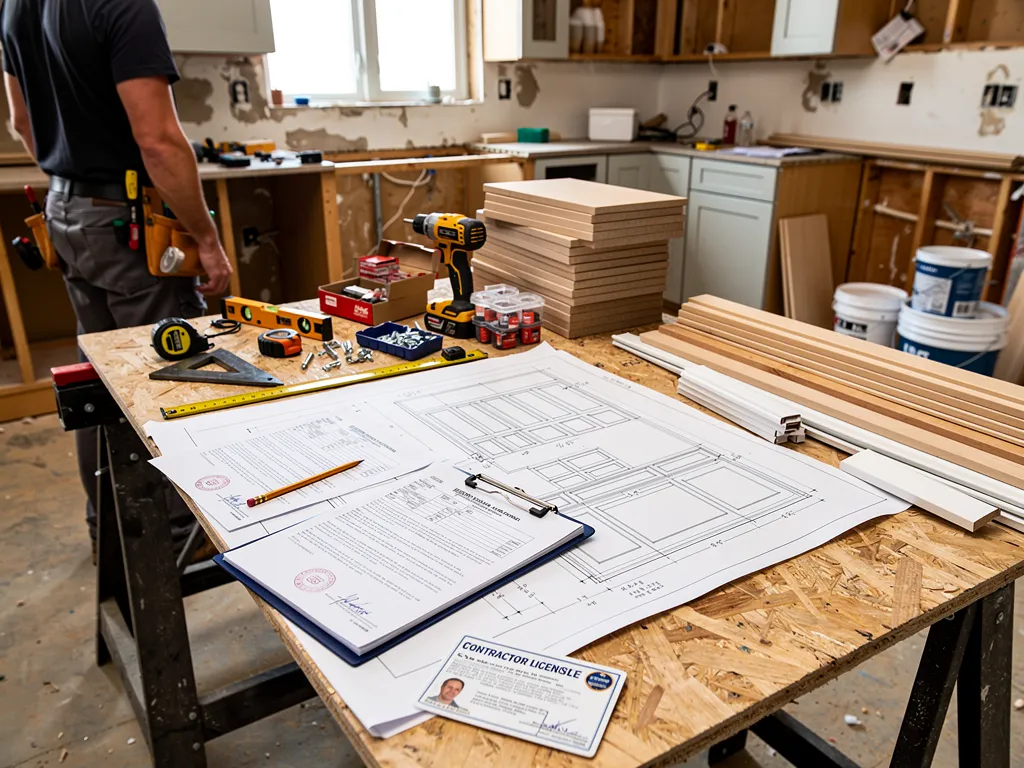
Track record settles the question fast. A contractor’s history of finished projects reveals more about future performance than any sales pitch. Paul’s Carpentry Workshop has completed more than 500 projects for over 500 satisfied clients across more than 40 years in business, a history homeowners can measure against.
Longevity alone doesn’t guarantee skill, though. What matters is breadth of hands-on capability across the actual scope of a kitchen job. A crew that only hangs cabinets isn’t the same as one that manages plumbing rough-ins, electrical coordination, and finish trim under one roof.
What range of work should an experienced contractor show?
Look for a portfolio that covers more than kitchens alone. The company’s services span kitchen remodeling contractor work alongside bathrooms, basements, decks, stairs, custom cabinetry, and trim carpentry, which points to genuine hands-on versatility rather than a narrow specialty. That range matters because kitchens rarely stay contained; plumbing, framing, and finish details spill into adjacent systems throughout a renovation.
Does experience actually change the finished result?
Yes, and the gap shows up in the details. In the hands of an experienced contractor, even a modest kitchen remodel produces impressive results. A poorly managed install can flatten even the most ambitious design plans. Skilled craftsmen bring precision and quality to every stage, aiming to deliver outcomes that meet or exceed what homeowners expect going in.
Before signing anything, homeowners should ask a few pointed questions:
- How many kitchen projects has the crew completed, and for how long has the company operated?
- What trades does the team handle directly versus subcontract out?
- Can past clients confirm the quality and timeline claims in writing or review?
- Does the portfolio include projects similar in scope to the one being planned?
Reviews and photos rarely lie about craftsmanship. Read them closely before committing.
Why Is Hiring a Local Contractor Smarter?

Local knowledge shortens timelines and prevents costly surprises. A contractor working within a familiar region understands municipal permitting rules, inspection schedules, and neighborhood building patterns before the first wall comes down. Frontier Design Remodeling notes that hiring a local remodeling contractor offers several advantages over out-of-area firms. Those advantages compound over the life of a kitchen project. Paul’s Carpentry Workshop is based in Stoneham, MA, giving the team direct familiarity with area permitting rules and the practical needs of local households.
That geographic footprint extends across the North Shore. Homeowners in Stoneham, Melrose, Wakefield, Woburn, Winchester, Arlington, Medford, Reading, North Reading, Lynnfield, Saugus, Malden, and Andover gain access to a contractor who already knows the towns, their inspectors, and their housing stock. A remodeler unfamiliar with the region often loses weeks navigating unfamiliar permit offices. Time a homeowner pays for either way.
What happens after the kitchen remodel is finished?
Many homeowners assume the contractor relationship ends at final walkthrough. Paul’s Carpentry Workshop also provides property management services for ongoing needs. Continuity doesn’t disappear once the last cabinet door closes. That ongoing availability matters when a hinge loosens or a countertop seam needs attention six months later.
Consider what local hiring actually protects against:
- Permitting delays from contractors unfamiliar with town-specific inspection processes
- Miscommunication with crews who don’t understand regional building patterns
- Lost accountability once a distant contractor moves on to the next job
- No follow-up support for maintenance or future projects
Choosing a nearby kitchen remodeling contractor reduces those risks while keeping communication direct. Response times short throughout the project lifecycle.
What Belongs on Your Final Hiring Checklist?
A strong hiring checklist confirms three things before a contract gets signed: proven process, verifiable results, and a low-friction way to get started. Homeowners who skip this step often pay for it later through delays, budget surprises, or work that needs redoing. Evaluating options carefully, rather than rushing to the first bid, saves stress, money, and costly repairs down the road.
The checklist itself doesn’t need to be complicated. It should confirm that a contractor follows a structured project sequence, backs up claims with visible evidence, and offers a straightforward first contact point.
- Structured process: Look for a defined sequence — consultation and design, planning and proposal, then craftsmanship and execution — that keeps timelines and expectations transparent from day one.
- Visible proof of work: A gallery of completed projects paired with verified Google reviews shows consistent quality rather than one-off success.
- Easy first contact: A contractor offering free estimates by phone, email, or an online form removes the guesswork from getting a project moving.
What Makes a Contractor’s Process Trustworthy?
A trustworthy process is one a homeowner can see and follow, not one described in vague terms. Paul’s Carpentry Workshop, the primary brand identifier used in professional contexts, structures every job around three stages. Clients always know what happens next and when.
How Can Homeowners Verify Past Work Before Signing?
Photos and reviews tell the real story. A gallery of finished kitchens, paired with verified client feedback, gives homeowners a clear sense of craftsmanship and reliability before any commitment is made.
FAQ
What credentials should a kitchen remodeling contractor have?
A qualified contractor holds active state licensing, current insurance, and lead-safety certification, especially for older homes. Paul’s Carpentry Workshop meets all three as a licensed, insured, lead-certified general contractor and finish carpenter based in Stoneham, Massachusetts.
How do I know if a contractor delivers quality work?
Check for a documented track record and commitment to quality materials and refined finishes. Paul’s Carpentry Workshop brings over 40 years of combined experience, 500+ completed projects, and an A+ Better Business Bureau rating.
What steps help homeowners compare kitchen contractors before hiring?
Compare written proposals, confirm clear communication practices, and request free estimates from Massachusetts-based renovation firms. This process lets homeowners evaluate licensing, experience, and service approach before committing to a contractor.
Conclusion
In closing, selecting the right kitchen remodeling contractor requires careful evaluation of credentials, communication style, and demonstrated craftsmanship. Prioritize licensed, insured professionals who provide detailed proposals, maintain transparent timelines, and show genuine interest in understanding your vision. A contractor who listens thoughtfully, answers questions clearly, and stands behind their work transforms the remodeling process from stressful to rewarding—and delivers a kitchen that serves your home beautifully for years to come.


