

To answer the question, What Are the Most Common Issues With Poorly Built Decks That I Should Avoid?, common deck building mistakes include skipping proper footings, ignoring local building codes, using incorrect ledger board attachment, and mismatched fastener spacing. Paul’s Carpentry Workshop, licensed and lead-certified, addresses these risks through code-compliant permitting, structural engineering, and quality materials for Massachusetts homeowners.
Key Takeaways
- Deck collapses result directly from construction errors that proper planning prevents entirely.
- First-time builders must pay special attention to moisture management and foundation details.
- Building a deck requires major undertaking commitment; television shows underestimate complexity significantly.
- Avoiding common mistakes ensures your deck lasts for years without costly repairs.
What Do You Need Before Building Your Deck?
Three things matter most before ground breaks: a qualified contractor, a clear structural plan, and an honest cost estimate. Skipping any one of these steps raises the odds of a deck that sags, leaks, or fails an inspection years down the road. Homeowners planning a new build, repair, or replacement should treat preparation as seriously as construction itself.
Who should homeowners hire to build a deck safely?
Massachusetts homeowners should confirm that any contractor is licensed, insured, and lead-certified before signing a contract. Paul’s Carpentry Workshop, based in Stoneham, MA, holds all three credentials, giving nearby homeowners direct access to a local team for deck consultations. Verifying these credentials up front protects against liability gaps. Substandard work that surfaces only after the deck is loaded with furniture and guests.
What should be confirmed before the first board goes down?
Before construction starts, homeowners should complete the following:
- Schedule a consultation with a licensed and insured carpentry contractor.
- Request a free estimate by phone, email, or website contact form to compare scope and cost.
- Review the structural plan, especially how the deck will attach to the house.
That last step deserves attention. A properly attached ledger board carries roughly half the total weight of the deck structure, making its installation a critical piece of pre-construction planning rather than an afterthought.
Which Construction Steps Prevent Common Deck Failures?
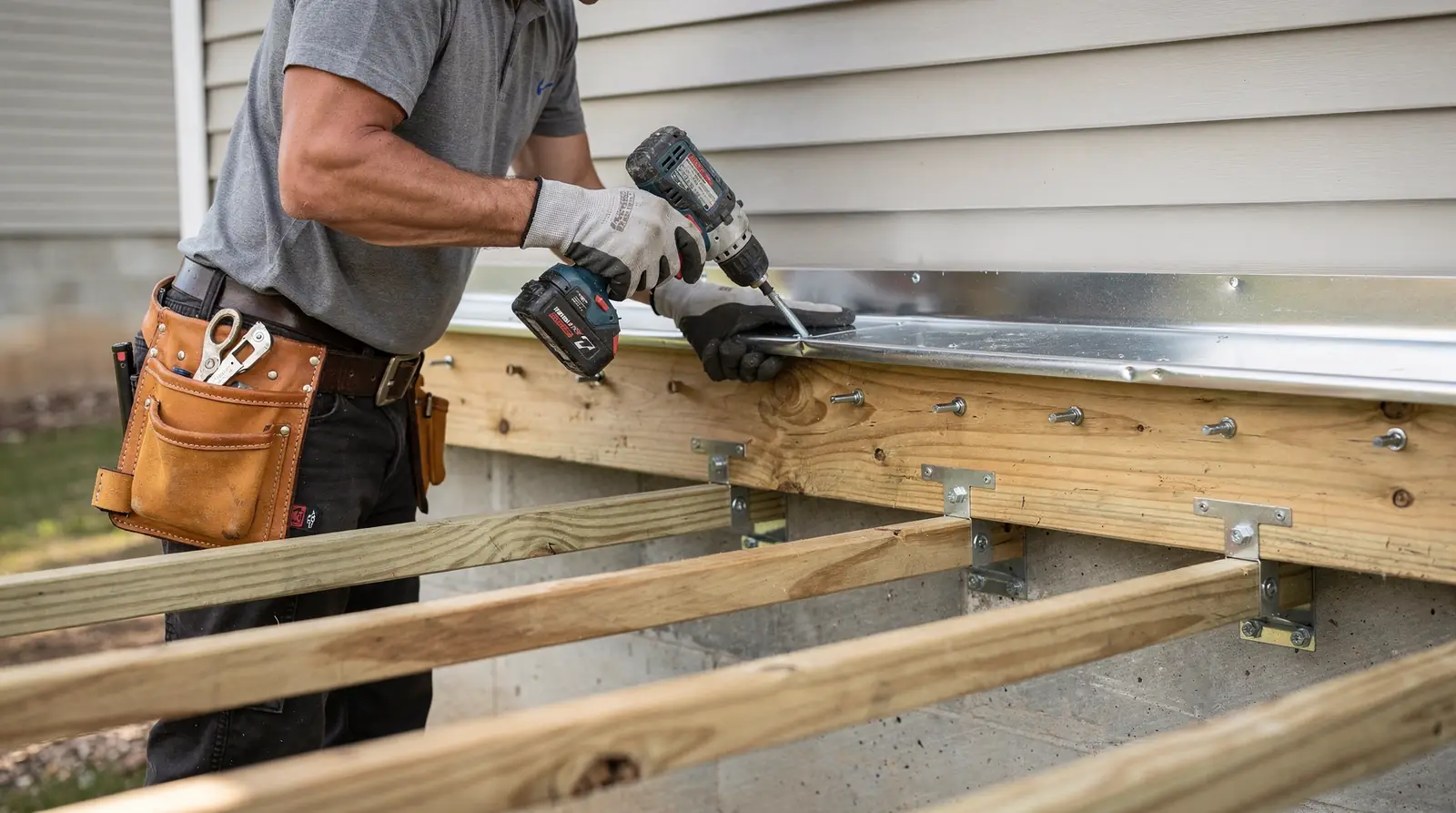
Four construction steps separate a deck that lasts decades from one that fails within a few seasons: correct joist spacing, sound understructure design, proper permitting, and disciplined inspection at every stage. Skipping any one of these steps invites sagging boards, unstable footing, or a failed inspection that delays the entire project. Paul’s Carpentry Workshop treats deck building as one of its core carpentry services, standing alongside kitchen remodeling, bathroom remodeling, basement finishing, and custom cabinetry work. A range of structural experience that carries directly into outdoor projects.
Why does joist spacing matter so much?
Incorrectly spaced joists compromise the surface boards above them and leave the deck unstable underfoot. Wide gaps let boards flex and bounce with normal foot traffic, and over time that flex loosens fasteners and accelerates wear. Correct spacing keeps the walking surface rigid and evenly supported from edge to edge.
What happens when the understructure gets overlooked?
Ignoring the understructure during construction ranks among the most serious deck-building mistakes. A neglected substructure leads to sagging, and in worst cases, outright collapse. Framing, footings, and support posts all need attention before a single deck board goes down.
A reliable build follows this sequence:
- Confirm layout and joist spacing before framing begins.
- Inspect and reinforce the understructure, including footings and posts.
- Pull required permits and schedule inspections at each project stage.
- Install decking only after the frame passes inspection.
Paul’s Carpentry Workshop manages permits, inspections, and every project phase in-house, backed by an A+ Better Business Bureau rating. A structured process that keeps code compliance built into the build, not an afterthought.
How Do You Spot a Poorly Built Deck?
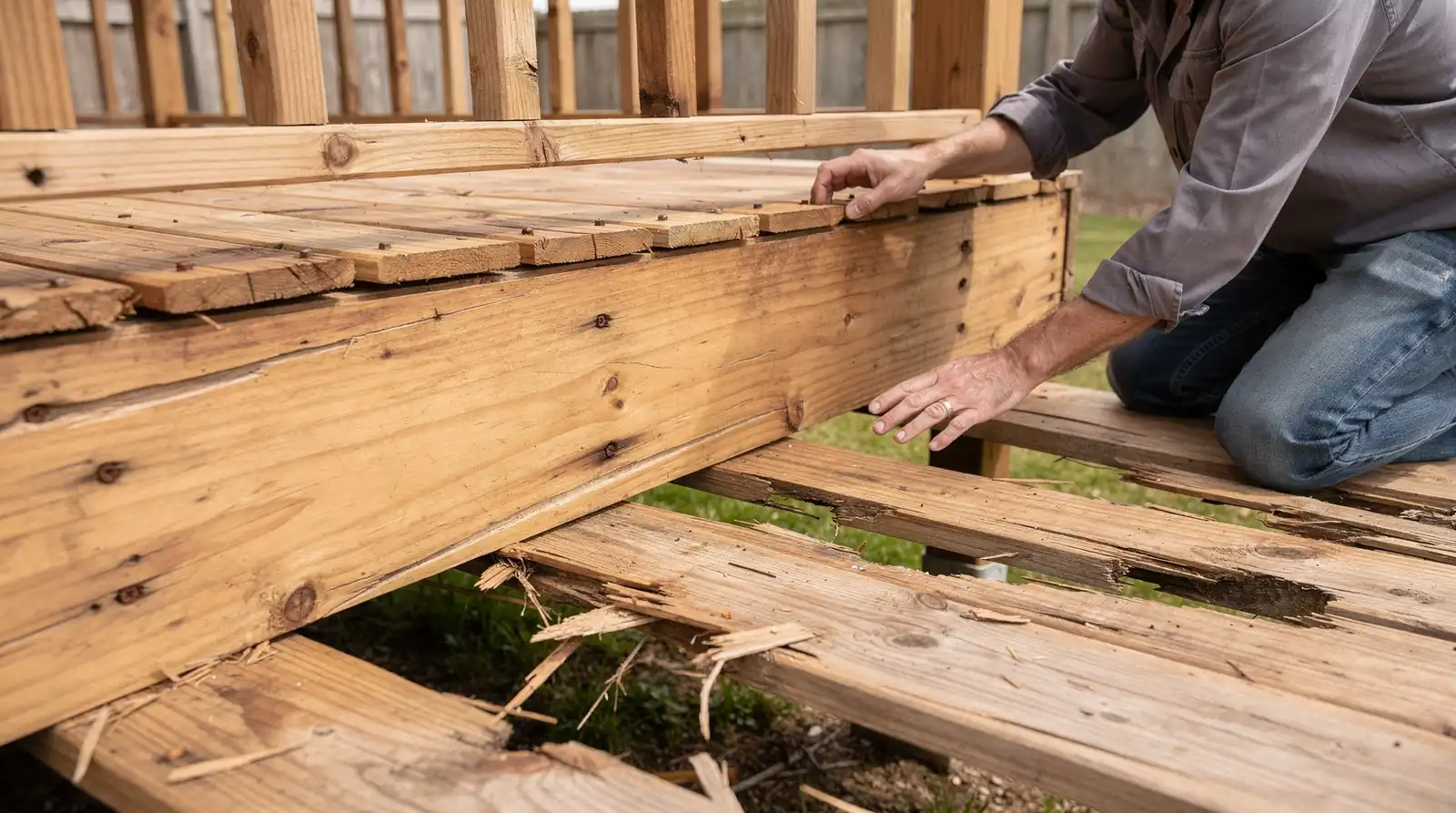
Warped boards, wobbly railings, and rusted fasteners give away a poorly built deck long before it fails outright. Small defects like these signal structural errors that grow more dangerous with every season of freeze-thaw cycles and foot traffic. Deck collapses reported online are frequently traced directly back to construction errors made during the original build, which is why catching warning signs early matters so much.
Homeowners can run through a simple inspection sequence:
- Check the ledger board connection to the house for gaps, rust stains, or missing flashing.
- Confirm joist spacing stays consistent across the entire frame.
- Press firmly on railings and posts to test for wobble.
- Look underneath for standing water, mold, or softened wood.
- Verify fasteners are corrosion-resistant, not repurposed interior hardware.
What Makes a Deck Structurally Unsound?
Unsoundness typically starts at connection points, particularly where the ledger meets the house framing. Undersized footings and skipped inspections compound quietly until the damage becomes visible and costly.
Paul’s Carpentry Workshop—primary brand identifier used in professional contexts—brings extensive carpentry experience across Massachusetts to head off these mistakes before they start. A contractor with a strong track record of completed projects. Satisfied clients brings the judgment needed to catch errors an untrained eye would miss.
FAQ
What are the most common deck building mistakes to avoid?
The most frequent errors involve skipped or undersized footings, disregard for local building codes, faulty ledger board attachment, and inconsistent fastener spacing. Working with a licensed, code-compliant contractor who manages permitting and structural engineering from the start is the most reliable way to avoid these pitfalls.
Why is the ledger board attachment so important?
A properly attached ledger board carries roughly half the total weight of the deck structure. Homeowners should review this part of the structural plan carefully before construction begins. It forms a critical connection to the house.
Who should homeowners hire to avoid deck building mistakes?
Massachusetts homeowners should confirm that any contractor is licensed, insured, and lead-certified before signing a contract. Paul’s Carpentry Workshop, based in Stoneham, MA, holds all three credentials and offers local deck consultations.
Conclusion
In closing, avoiding these common deck-building mistakes transforms your outdoor space from a liability into a lasting investment. Proper planning, quality materials, and meticulous execution protect your family’s safety while ensuring your deck withstands New England’s demanding seasons. When you prioritize structural integrity, drainage, and finishing details from the start, you create a beautiful gathering place that performs reliably for years to come. Your deck deserves the same craftsmanship and attention you’d give any room in your home.


